
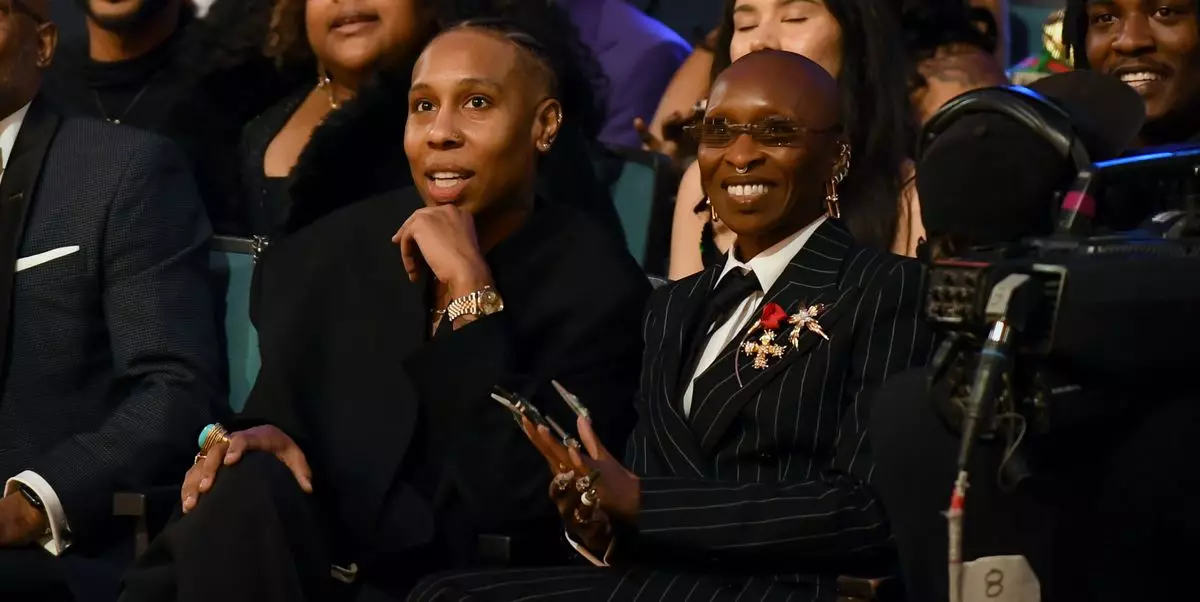
In a culture obsessed with constant visibility, Cynthia Erivo and Lena Waithe exemplify a refreshing approach to love and personal privacy. Their relationship, shrouded in subtlety yet brimming with significance, challenges conventional expectations about celebrity romance. While fans and media alike yearn for detailed disclosures, this dynamic duo underscores the importance of boundaries and authenticity. Their story prompts a deeper reflection on how Black women in Hollywood are reshaping narratives around intimacy—choosing to prioritize their peace over social media validation.
By intentionally keeping their relationship under wraps, Erivo and Waithe demonstrate that true connection does not need public validation to be meaningful. This attitude destabilizes the narrative that fame equates to constant exposure, advocating instead for a more holistic, self-empowered idea of love. Their approach speaks profoundly to contemporary conversations surrounding mental health, autonomy, and the right to privacy—especially for Black women, who frequently face stereotyped scrutiny.
Tactical Detachment: Privacy as a Form of Power
Erivo’s words about guarding her romantic life carry an empowering message: not every aspect of one’s existence must be a public spectacle. Her assertion that her relationship is fundamentally her own is powerful, especially in an era where influencers and celebrities often feel compelled to overshare. By choosing silence over sensationalism, Erivo and Waithe position themselves as role models for managing fame with dignity.
Moreover, this stance allows them to nurture genuine intimacy, free from the constraints of media scrutiny. It’s an act of resistance; in a space where Black women’s relationships are too often exploited or sensationalized, these artists reclaim their space. Their choice underscores a broader truth: authentic love can flourish in privacy, and societal pressure to produce ‘viral’ moments might actually hinder genuine connection.
Breaking the Cycle: Challenging Stereotypes and Embracing Complexity
The narrative surrounding Waithe’s previous marriage and subsequent divorce highlights her evolving journey—one rooted in understanding her own needs and reasserting her agency. Her openness about her past and her current relationship signals a shift toward embracing complexity and acknowledging that life—and love—is rarely linear. Her success as a producer, writer, and actress punctuates this narrative, illustrating how Black women are increasingly leading conversations—not just about race and gender, but about authentic living.
Meanwhile, Erivo’s decision to maintain a low profile with her romantic endeavors aligns with her larger artistic ethos. Yet behind the scenes, their public appearances—whether walking the red carpet separately or sitting together at high-profile events—embody a quiet defiance: their relationship exists on their terms, as a source of joy and strength, not a spectacle. It challenges the stereotype that Black women’s sexuality—or romance—must be hyper-visible or heavily scrutinized.
A New Paradigm: Love as a Source of Empowerment
In the end, it’s not just about two celebrities dating quietly; it’s about redefining what meaningful relationships look like in contemporary society. Erivo and Waithe exemplify how Black women can pursue happiness unapologetically, rejecting societal expectations that often seek to diminish or hyper-sexualize their experiences. Their story offers hope that authenticity, privacy, and personal boundaries are powerful tools for creating spaces where love can thrive authentically.
Their journey encourages us to question the narratives we’ve been fed about celebrity romance—challenging us to see love not as a public performance but as a deeply personal journey. As more Black women in Hollywood follow suit, prioritize privacy, and refuse to conform to exhausting stereotypes, they pave the way for a future where love, in all its complexity, is celebrated on one’s own terms. And perhaps, that is the most revolutionary act of all.