
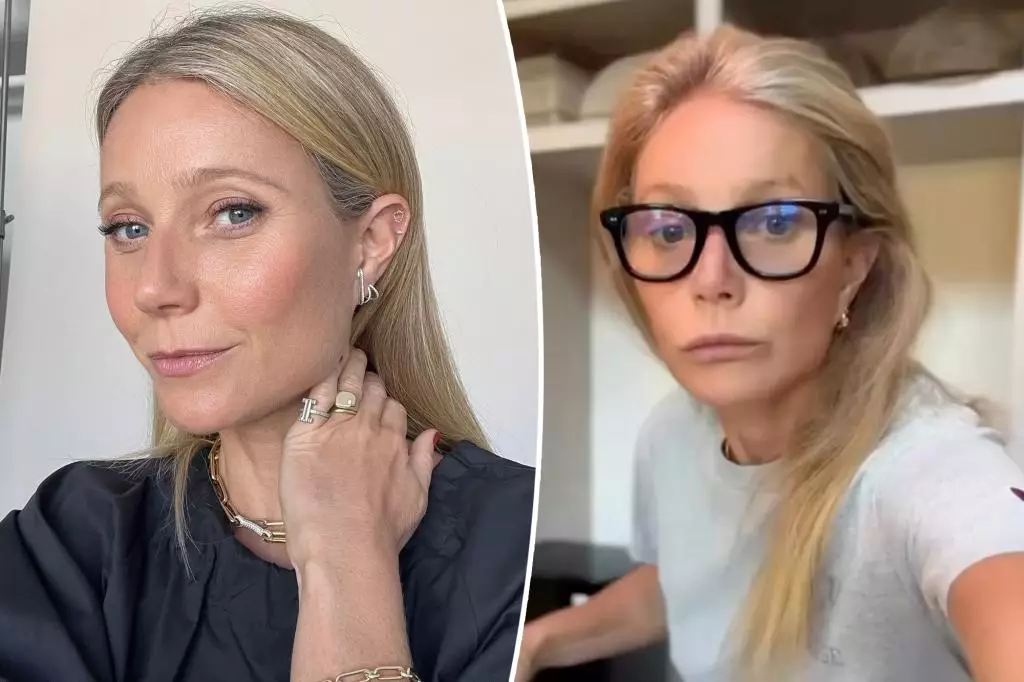
Gwyneth Paltrow, an icon often associated with elegance and timeless beauty, has recently become the subject of intense scrutiny due to her seemingly altered facial features. What was meant to be a simple cooking video quickly transformed into a digital battleground over her appearance. Many fans and followers were quick to notice that her lips appeared fuller, prompting a wave of speculation and judgment. This scenario exposes a troubling societal tendency: the relentless obsession with perfecting and controlling one’s appearance, often at the expense of authenticity. Paltrow’s case is a stark reminder that even those who appear confident and composed publicly are often under the microscope, pressured to conform to impossible standards of beauty.
The Impact of Social Media and the Myth of Authenticity
Social media platforms, while empowering for sharing moments of life and art, have simultaneously become breeding grounds for criticism and superficial judgments. In Paltrow’s case, her cooking video was not intended as a beauty statement but inadvertently became a platform for online commentary on her looks. The comments ranged from innocent curiosity to harsh criticism, revealing how easily public figures become prisoners of their image. This phenomenon perpetuates a skewed perception that physical appearance defines a person’s worth, especially when high-profile individuals are scrutinized under relentless cameras and comment sections. Ironically, such constant evaluation often leads to increased pressure to manipulate one’s appearance, fostering a cycle where insecurities are masked behind cosmetic procedures.
Celebrity Transparency: Power or Deception?
Gwyneth Paltrow has been candid about her experience with cosmetic interventions, acknowledging that she uses treatments like Xeomin. Her openness is commendable in a culture that often portrays plastic surgery as taboo or shameful. However, her honesty brings to light a paradox: celebrities who openly discuss their use of aesthetics are simultaneously held to impossible standards of natural beauty. When her lips appear fuller than usual, it’s tempting to dismiss it as another example of vanity or deceit, rather than acknowledge the complex reality of aging and beauty in the public eye. Paltrow’s experiences challenge us to reconsider what authenticity truly means—are we more accepting of honesty about imperfections, or are we unconsciously demanding perfection from those who shed light on their own vulnerabilities?
The Cultural Narrative Surrounding Aging and Beauty
The criticism directed at Paltrow may also be rooted in a societal obsession with youthfulness. At 52, she is still considered young by many standards, yet her appearance is scrutinized as if she’s trying to cling to a lost youth. The underlying bias is clear: aging women are often judged more harshly and more publicly. Instead of celebrating longevity and experience, society pushes a narrative that beauty is temporary and must be maintained at all costs. Paltrow’s apparent decision to enhance her lips could be viewed as part of a broader cultural conversation—whether it’s about embracing aging naturally or actively shaping one’s image to fit societal ideals. There’s a fine line between personal choice and societal pressure, and Paltrow’s experience highlights how difficult it is to navigate that boundary without facing backlash.
The discourse surrounding Gwyneth Paltrow’s changing appearance underscores a larger societal issue: our collective obsession with surface and youth, and the failure to honor authenticity. Whether she has undergone cosmetic procedures or not, her situation invites us to question our expectations of perfection. Do we truly value honesty and vulnerability, or are we more comfortable with sanitized images that reinforce unattainable ideals? Celebrities like Paltrow, who publicly acknowledge their choices, serve as catalysts for a larger cultural shift—one that urges us to accept ourselves and others at every stage of life, free from judgment and superficial standards. In a world obsessed with flawless facades, perhaps the most radical act of all is to embrace our authentic selves wholeheartedly.