
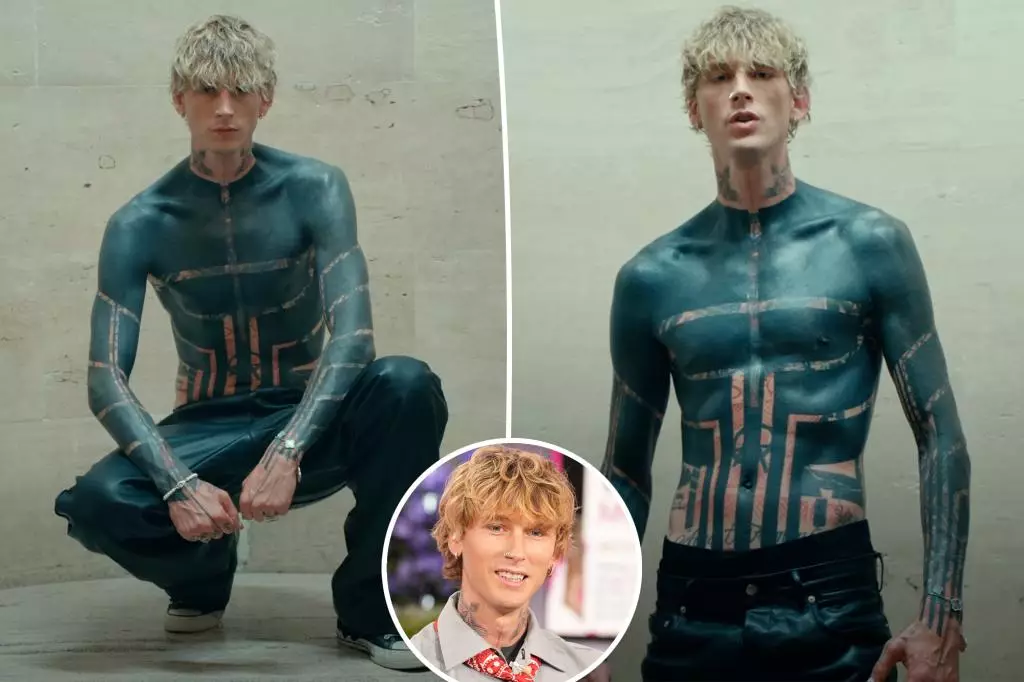
Machine Gun Kelly’s recent decision to undergo an extensive blackout tattoo exemplifies a profound pursuit of self-reinvention. Unlike typical tattoos that celebrate aesthetics or commemorate memories, MGK’s large-scale ink signifies a deeper desire to redefine and reclaim his body—an act that pushes the limits of physical endurance and psychological resilience. His choice to cover most of his upper body in black ink, leaving only select tattoos visible, illuminates a symbolic erasure, a blank slate on which to forge a new identity. This act of intentionally inflicting pain to achieve a sense of renewal challenges conventional notions, emphasizing that art—especially body art—can serve as a conduit for personal transformation.
The artist’s explanation reveals an underlying philosophy: tattooing as an expression of high anxiety and a form of mental architecture. His willingness to endure what he describes as the “worst torture” highlights a complex relationship between pain and empowerment. Instead of avoiding discomfort, MGK embraces it, viewing the process as an act of courage and a tool for psychological catharsis. This perspective elevates body modification from mere vanity to a meaningful act rooted in emotional necessity.
Redefining Identity Through Physical Reshaping
MGK’s desire to “redesign” his skin stems from a curiosity about the human body’s potential for transformation. His fascination with the skin as the largest and most dynamic organ speaks volumes about his aspiration to challenge societal and personal boundaries. Having been inked since adolescence, his body is already a tapestry of stories and memories. The decision to overlay it with black ink signals a pivotal turning point—an intentional blank canvas where new narratives can be written. It symbolizes a break from the past, a deliberate effort to shed previous identities or emotional baggage.
What makes MGK’s act compelling is the emotional significance embedded within the artwork. Despite covering much of his body in darkness, he chooses to preserve a tattoo created by his daughter, Casie, anchoring his transformation with a symbol of familial love and continuity. This choice underscores a nuanced understanding: even amidst radical change, certain connections remain unaltered and provide a sense of grounding. It’s a reminder that self-reinvention doesn’t necessitate erasing one’s roots but rather integrating them into a new version of oneself.
The Power of Pain as a Personal Catalyst
MGK openly describes the tattoo process as a form of “torture,” signaling that this was no casual or superficial pursuit. His refusal to numb himself or seek comfort during the procedure demonstrates a willingness to confront discomfort head-on, viewing it as a catalyst for growth. This attitude reflects a broader cultural narrative: that true change often involves facing hardship directly, and that pain can be an elegant means for achieving liberation.
His motivations seem intertwined with mental health struggles, as evidenced by his lyrical references to breakdown and inner turmoil. The act of tattoos, for MGK, thereby becomes an act of resistance—an assertion of control over his body and mind. It’s a visceral reminder that healing and self-definition might require enduring suffering, but that the resultant artwork and personal metamorphosis justify the ordeal. In a society that often seeks quick fixes, his embrace of pain as a transformative tool is both courageous and provocative. It challenges us to reconsider how discomfort can serve as a stepping stone toward authenticity and empowerment.
—
This critical exploration of MGK’s body modification highlights a daring philosophy: that sometimes, transformation requires confronting pain and challenging personal boundaries. His journey exemplifies that true self-discovery is rarely comfortable but can ultimately lead to profound empowerment when rooted in authentic expression.