
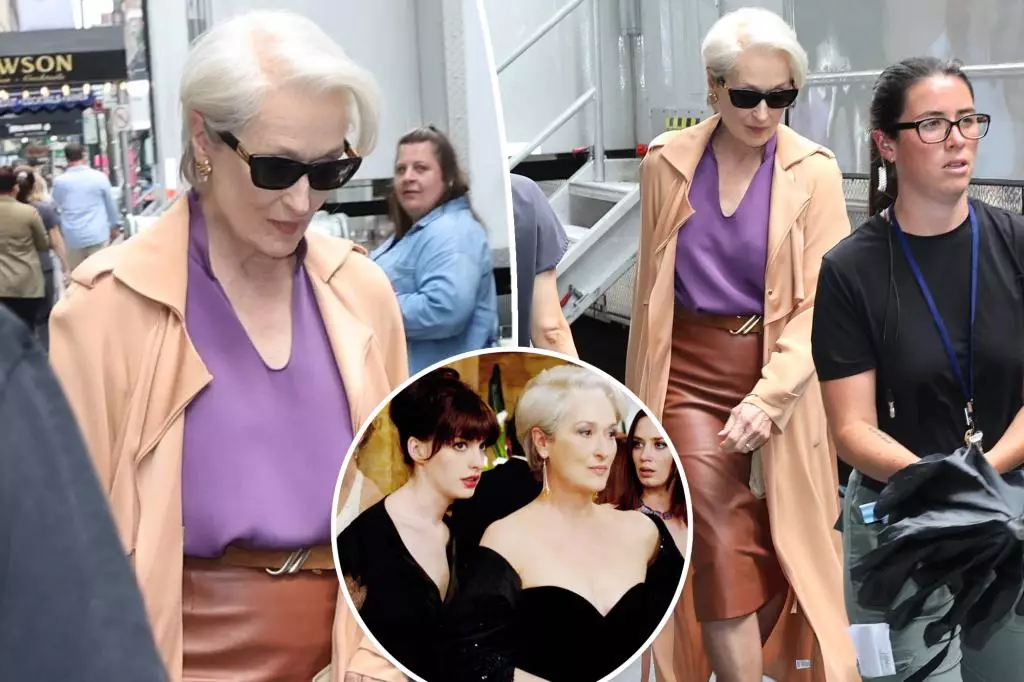
When Meryl Streep was glimpsed on the set of the highly anticipated “The Devil Wears Prada 2,” it was more than just a newsflash; it was a powerful reminder of the enduring influence of Miranda Priestly. Streep’s portrayal of the formidable editor-in-chief redefined what it means to be a commanding woman in a high-stakes industry. Her reappearance signals a return not only to the runway of fashion but also to the arena of cultural icons who challenge societal norms. Priestly’s icy demeanor combined with her razor-sharp intelligence crafted a character that is as complex as she is captivating, resonating deeply with audiences who admire her authority and poise.
The decision to bring back Miranda Priestly in the sequel underscores Hollywood’s acknowledgment of the character’s long-lasting impact. It’s a storytelling choice that reflects an understanding of how certain characters transcend their narrative worlds to symbolize broader themes of power, ambition, and resilience. Streep, with her legendary acting prowess, has always been a critical force in this portrayal, elevating the role from mere caricature to a layered depiction of a woman navigating a treacherous corporate landscape. Her return hints at an exploration of her character’s evolution — how she, too, must contend with the shifting sands of an industry undergoing profound transformation.
The Contradiction of Power and Vulnerability
Streep’s candid admission that playing Miranda was a “horrible” experience reveals an intriguing contradiction. Here lies a character who exudes control and charisma but suffers beneath the veneer of polished perfection. Priestly’s icy persona is, after all, a mask for the emotional toll of her relentless pursuit of excellence. The actress’s revelation underscores the complexity of portraying such a formidable figure: power often comes at a cost. As Streep described, embodying that level of methodological intensity on set was emotionally taxing, which adds layers of authenticity to her performance.
This behind-the-scenes struggle prompts viewers and critics alike to reassess the nature of leadership within elite circles. Miranda Priestly embodies both authority and alienation—she is revered yet isolated, admired yet misunderstood. Her depiction forces us to grapple with the paradoxes faced by women in power: the necessity of emotional restraint versus the human desire for vulnerability. The sequel’s potential to delve deeper into this dichotomy makes it compelling, transforming her into a more three-dimensional figure whose strength is as much about internal resilience as external dominance.
Fashion as a Reflection of Identity and Power
The visual revival of Prada’s muse is equally significant. Streep’s return is marked by her iconic icy white pixie cut and meticulously styled wardrobe, signaling that fashion remains at the core of Priestly’s identity. Fashion here is not merely superficial—it’s a language through which she asserts her authority and status. The long tan trench coat, purple blouse, and matching statement heels serve as armor, reinforcing her authority while also hinting at her complex personality—a woman who is both stylish and strategic.
Meanwhile, Anne Hathaway’s glimpses in her nostalgic cerulean sweater evoke a sense of continuity with the original film’s aesthetic. Her character, Andy Sachs, represents the everywoman’s perspective in contrast to Priestly’s high-powered persona. The mutual visual references suggest that the sequel will continue to explore the power dynamics between these two figures, emphasizing how fashion and appearance can both conceal and reveal inner strength.
The costumes and styling in this film are more than accessories; they serve as narrative devices that illustrate the characters’ inner worlds and societal positioning. The way these characters dress signals their ambitions, frustrations, and transformations. Fashion becomes a language of power, a visual shorthand that enriches storytelling and deepens audience engagement.
The Evolving Landscape of Media and Influence
The film’s storyline—set against the backdrop of a declining print industry—mirrors real-world transformations in media and influence. Priestly’s navigation of her career amidst digital upheaval highlights her resilience and adaptability, qualities that are vital in today’s rapidly changing cultural landscape. The character’s struggle to maintain relevance in a digital age is a reflection of broader societal shifts: traditional institutions are challenged, but the desire for authority, style, and influence remains unchanged.
Adding fresh faces like Lucy Liu, B.J. Novak, and Kenneth Branagh expands the narrative scope, suggesting a more diverse and layered exploration of power dynamics and personal ambitions. Their inclusion signals an acknowledgment that influence is no longer concentrated within a single industry or demographic but is distributed across varied fields and cultural spheres.
This sequel promises to explore not only the personal journeys of these characters but also the societal implications of a media landscape in flux. Priestly’s character embodies that tension—holding onto her authority while adapting to a new, unpredictable era. Her evolution in the sequel will likely serve as a mirror for viewers navigating similar transitions in real life.
In essence, the return of “The Devil Wears Prada” is not merely about revisiting a beloved story but about engaging with themes of power, resilience, and transformation that remain profoundly relevant. In reclaiming Miranda Priestly’s iconography and complexity, the film can challenge perceptions about leadership and influence while celebrating the multifaceted nature of female authority.