
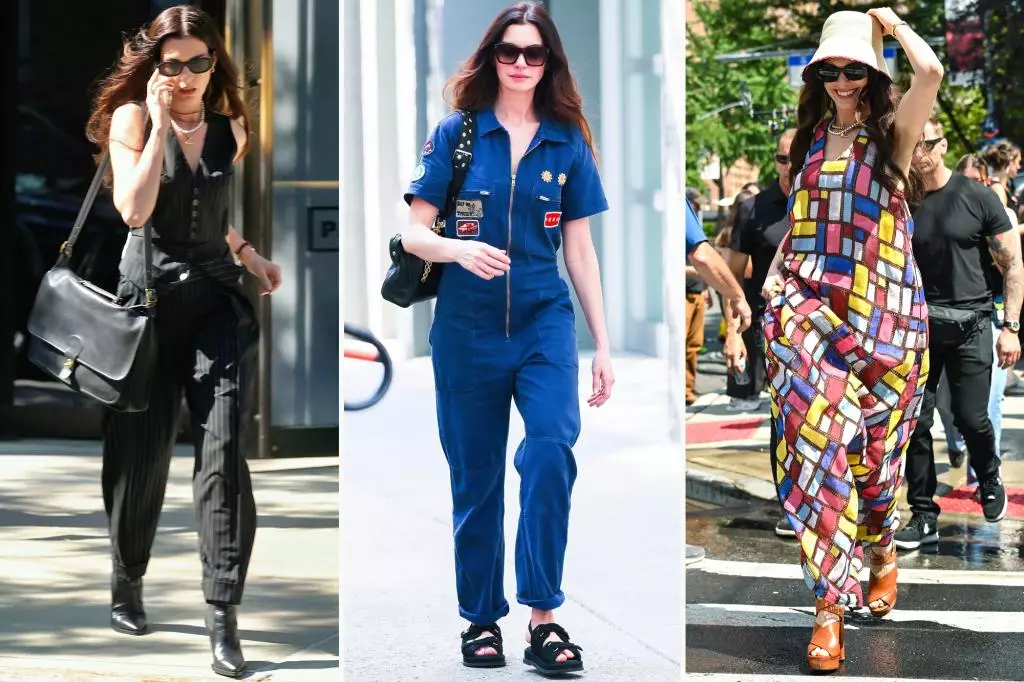
Filming for the highly anticipated sequel to “The Devil Wears Prada” signifies more than just a continuation of a beloved narrative; it signals a celebration of fashion as a form of power, identity, and cultural commentary. Returning to the screen in 2026, the film promises to elevate its sartorial storytelling with outfits that are nothing short of spectacular. The film’s casting begins to hint at a dynamic blend of nostalgia and innovation, with stars like Hathaway, Streep, Blunt, and Tucci reprising their roles, while new faces bring fresh energy. Yet, it is the clothing and styling choices—both on and off the set—that truly steal the spotlight, demonstrating how fashion remains deeply embedded in character development and narrative progression.
Style as a Reflection of Character Evolution
The images emerging from the set reveal a fascinating evolution—not only for the characters but also for fashion’s role within the storyline. Andy Sachs, portrayed as a driven fashion industry insider, appears to have retained her penchant for luxury but with nuanced upgrades that suggest personal growth. Her array of high-end accessories—a diamond-studded Bulgari ring, a beaded Marlo Laz choker, and a Gabriela Hearst maxi dress—serve as potent symbols of her position within this high-stakes world. These choices are far from mere aesthetics; they are intentional indicators of her status, confidence, and perhaps her own journey toward redefining her identity in the fashion realm.
Conversely, her casual, yet still ostentatious, outfit featuring a denim jumpsuit from Re/Done x Ford’s collaboration, underscores her practical side, blending utility with opulence. It’s a statement: even in moments of leisure, her fashion choices are deliberate, asserting mastery over her environment while subtly hinting at vulnerability beneath the surface. The juxtaposition of practicality and luxury illustrates how personal transformation can be communicated through wardrobe—each piece a narrative fragment layered with meaning.
The Power of Costume and Set Design in Narrative Depth
While the specifics of costume design remain under wraps, the set glimpses reveal a keen emphasis on sartorial storytelling. It remains uncertain if Patricia Field, the legendary costume designer behind the original, will return, but if the set’s fashion moments are any indication, the sequel’s wardrobe will be a powerhouse—balancing extravagance with storytelling precision. The clothes worn by the cast articulate character arcs, social status, and evolving personal values, reinforcing the idea that fashion is a language of its own.
Costume choices—like Miranda Priestly’s vintage pinstriped Gaultier suit or Andy’s more casual, yet still luxurious, outfits—highlight the power of clothing to communicate authority, sophistication, and transformation. Fashion in “The Devil Wears Prada 2” seems poised to go beyond aesthetics: it will serve as a mirror of inner growth and a device to deepen viewers’ understanding of character dynamics in a world obsessed with image.
Fashion as a Cultural Phenomenon, Not Just an Accessory
Ultimately, this sequel reaffirms that fashion is a potent cultural force capable of shaping perceptions and signaling change. The ensemble of characters, from the formidable Miranda to the evolving Andy, will likely showcase a spectrum of styles representing their personal stories. As such, “The Devil Wears Prada 2” is more than a film—it’s an anticipated canvas for haute couture, a reflection of societal values, and a declaration that in the realm of fashion, power and personality are intertwined as never before.
By spotlighting luxury brands and high-concept styling, the movie amplifies fashion’s role as a form of communication—a narrative device that underscores ambition, reinvention, and resilience. This isn’t just about looking good; it’s about asserting presence, commanding respect, and asserting one’s voice through what they wear. As anticipation mounts, it’s clear that the sequel will continue to elevate fashion from mere wardrobe to emblematic storytelling, proving once again that in the world of “The Devil Wears Prada,” style is synonymous with strength.