
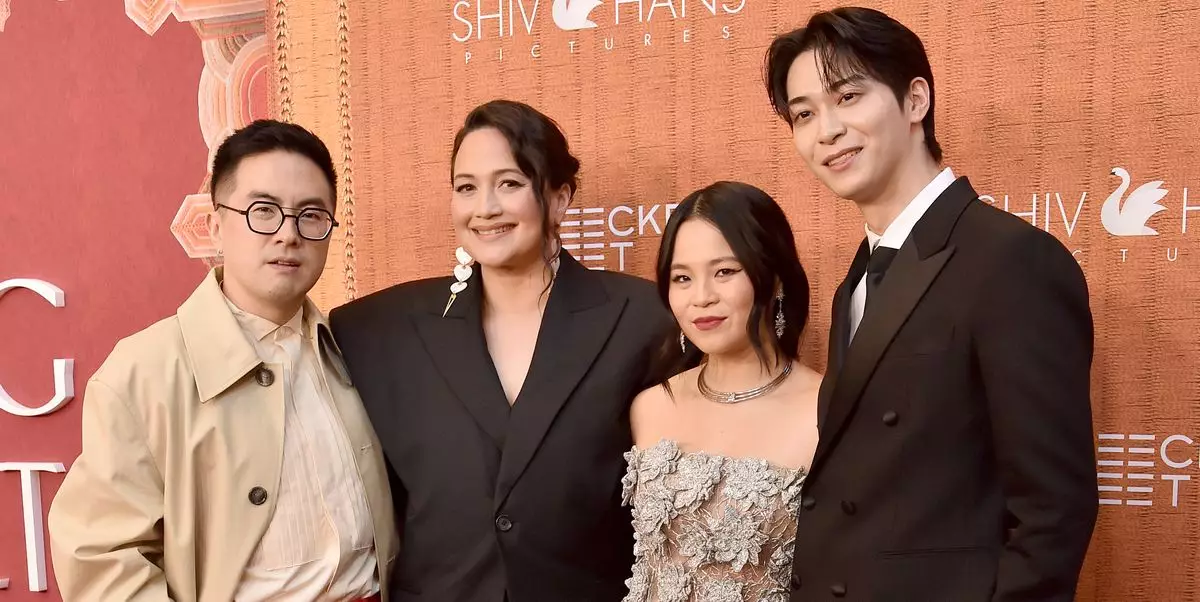
Andrew Ahn’s reimagining of the 1993 classic “The Wedding Banquet” breathes new life into a narrative that resonates deeply in today’s complex social landscape. Originally crafted by Ang Lee, the film’s latest iteration introduces us to a vibrant world of love, cultural expectations, and the pursuit of identity through the eyes of four friends in Seattle. This modern rom-com captivates not just with its plot, but through its astute examination of contemporary relationships, identity politics, and the dynamics of family.
At the heart of the story is the intricate, often awkward dance of a green card marriage, wherein Min (played by Han Gi-chan), a closeted Korean heir, proposes a sham arrangement to Angela (Kelly Marie Tran). Angela holds a significant condition for her agreement: Min must finance her partner Lee’s (Lily Gladstone) IVF journey. This narrative, rife with humor, frustration, and warmth, expertly unveils the realities faced by those who live within the shadows of societal expectations.
Characters Who Resonate
The film’s character dynamics are essential in creating a relatable and engaging story. Each character represents different facets of identity and cultural expectation, making them feel real and relatable. Gladstone’s portrayal of Lee stands out; she embodies a blend of humor and sincerity that counterbalances the chaotic circumstances unfolding around her. As Gladstone herself reflects, the opportunity to dig into her comedic talents allowed her to push beyond the archetype of the ‘straight character.’ This portrayal serves as a reminder that humor can be a powerful tool for connection.
Moreover, Kelly Marie Tran’s performance is particularly noteworthy. Her experience on set was not just an acting journey but a personal revelation. By coming out publicly as queer during the film’s production, Tran underlines a significant emotional context that enriches her character’s journey. Her ability to channel this newfound authenticity into her performance adds layers to Angela, reaffirming how crucial representation is in modern media.
Preserving Legacy While Making it Relevant
The involvement of James Schamus, who co-wrote the original film, infuses the new screenplay with a sense of continuity while also embracing contemporary narratives. His return ensures that the heart of “The Wedding Banquet” remains intact while allowing for nuanced storytelling that reflects today’s societal issues. As noted by Gladstone, Schamus skillfully preserves the charm of the original while weaving in fresh narratives that appeal to a modern audience.
Ahn’s vision of filmmaking as a collaborative effort resonates deeply in the film’s production. His acknowledgment of the project as not just about making a movie but building lifelong bonds speaks to the significance of community in storytelling. This collaborative spirit enhances the film’s depth as it draws on the authentic experiences of its diverse cast and crew.
A Celebration of Chosen Families
“The Wedding Banquet” transcends the limiting definitions of family, embracing the idea of chosen kinship. As the characters navigate the challenges of love and acceptance, the film sends a powerful message about the importance of support systems, whether they are formed through blood or shared experiences. This theme is particularly pertinent to marginalized communities who often find themselves outside traditional family structures.
As Ahn explains, the film’s message is timeless, emphasizing that the narratives central to our lives evolve but remain significant across various contexts. With the inclusion of traditional elements—strikingly represented by Min’s grandmother, played by Youn Yuh-jung—the film illustrates how cultural heritage can coexist harmoniously with personal identity. The grand wedding becomes a metaphor for the multifaceted nature of family, urging audiences to reflect on their own dynamics.
Theater Experience and Future Outlook
With its nationwide theatrical release, “The Wedding Banquet” promises to foster dialogue and reflection among viewers. While streaming platforms await, the cinema experience allows audiences to engage with the film in a collective environment, enhancing its emotional undertones. This shared experience not only amplifies the impact of the film but underscores its relevance in current discourse surrounding love and identity.
As the film unfolds, viewers are invited into a vibrant world filled with humor, warmth, and an exploration of what it truly means to commit in today’s society. “The Wedding Banquet” offers more than just a romantic narrative; it is a timely commentary on love, acceptance, and the diverse tapestry of modern-day relationships that can feel both inviting and challenging.